
When it comes to your eyes, knowing which specialist to visit is crucial for receiving the proper care. At Spindel Eye Associates, we help those in Derry, NH decide when to see an optometrist vs. an ophthalmologist for their eye care. While both professionals deal with eye health, their training, expertise, and the services they provide differ significantly. Choosing the wrong one might mean a wasted trip or a delay in necessary treatment. Below, we’ll break down exactly what separates these two eye care providers.
What Is an Optometrist?
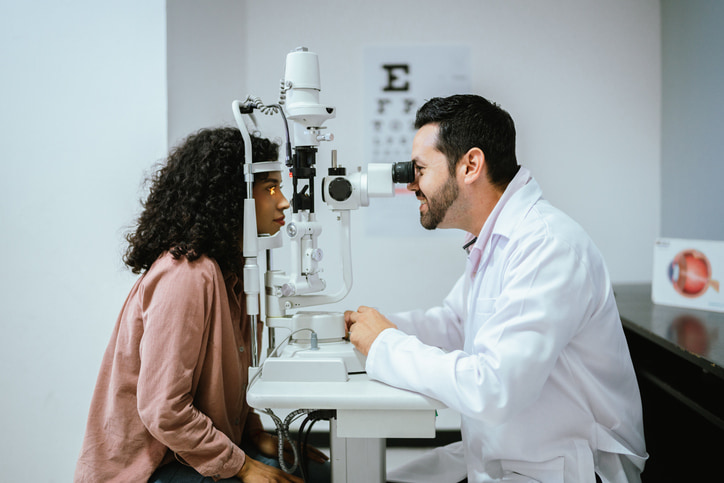
An optometrist is the primary health care professional dedicated to the health of your eyes. Think of them as the general practitioners of eye care, providing essential services to maintain and improve your vision. They’re the first line of defense for your eye health and are typically the doctor you’ll visit for routine eye exams. Their primary focus is on vision care, including correcting refractive errors like nearsightedness, farsightedness, and astigmatism. If you find yourself squinting to read road signs, struggling to see the text on your computer screen, or holding your phone at arm’s length just to read a message, an optometrist is the expert who can evaluate your vision and prescribe glasses or contact lenses tailored to your needs.
But optometrists do much more than write prescriptions for corrective lenses. They’re trained to detect and diagnose abnormalities or health issues affecting the eyes. For example, if you experience symptoms like redness, irritation, or blurred vision due to an eye infection or dry eyes, they can assess the condition, identify the cause, and often prescribe medication to treat it. Additionally, they play a critical role in identifying early signs of more serious eye diseases, such as glaucoma or macular degeneration. While they may refer to certain complex cases to ophthalmologists for specialized care or surgery, optometrists are highly skilled in managing many eye-related conditions and promoting overall eye health.
What Is an Ophthalmologist?
An ophthalmologist is a highly trained medical doctor (MD) or Doctor of Osteopathic Medicine (DO) who specializes in eye and vision care. They undergo extensive education and training, which includes medical school. This advanced training sets them apart from optometrists, as ophthalmologists are licensed not only to conduct routine eye exams and prescribe glasses or contact lenses but also to practice medicine and perform complex surgical procedures.
Their expertise encompasses a wide range of responsibilities, from diagnosing and treating eye diseases to managing more serious conditions that may require surgery. For instance, if you need cataract surgery to restore vision clarity, LASIK to correct refractive errors, or advanced treatments for macular degeneration, it’s an ophthalmologist who would handle these procedures. They’re also the specialists to consult for eye conditions that stem from or are linked to systemic health issues, such as complications from diabetes or autoimmune diseases like arthritis.
When to See an Optometrist vs. an Ophthalmologist
Deciding between an optometrist vs. an ophthalmologist for an eye exam depends largely on your current eye health and what you need to address.
See an Optometrist If:
- You need a routine eye exam to check your visual acuity and general eye health.
- You need a new prescription for eyeglasses or contact lenses.
- You have minor eye infections, such as pink eye or styes.
- You have eye issues such as dry eye, eye strain, or seasonal allergies affecting the eyes.
- You need monitoring for stable chronic conditions such as mild glaucoma or diabetic retinopathy.
- You have sudden vision changes, including sudden loss of vision, seeing flashes of light, or severe eye pain requiring immediate medical attention.
See an Ophthalmologist If:
- You need an eye surgery procedure such as cataract removal, glaucoma surgery, or refractive surgery (LASIK).
- You have a complex eye condition such as macular degeneration, diabetic retinopathy, or retinal detachment.
- You have a systemic health issue, such as high blood pressure or HIV, that’s severely affecting your vision.
- You have sudden vision changes, including sudden loss of vision, seeing flashes of light, or severe eye pain requiring immediate medical attention.
- You have previously had eye surgery and need post-operative care.
Pediatric Optometrist vs. Ophthalmologist
Parents often wonder about the difference between optometrists and ophthalmologists when it comes to their children. A pediatric optometrist is excellent for routine screenings, vision therapy, and prescribing glasses for children. However, if your child has a severe eye misalignment (strabismus), a blocked tear duct, or a congenital cataract, a pediatric ophthalmologist is likely the better choice for surgical intervention or advanced medical treatment.
Choose the Right Doctor for Your Vision Needs
Ultimately, the choice comes down to the complexity of your needs. For the vast majority of the population, an optometrist is the ideal starting point for maintaining healthy vision. They’re accessible, highly skilled, and capable of diagnosing most issues. If your condition requires a scalpel, a laser, or advanced medical management, the ophthalmologist takes the lead. Don’t wait until your vision is blurry to book an appointment. Whether you choose an OD or an MD, the most important step is ensuring you have regular checkups to keep your eyes healthy.
- Allergies and Dry Eyes2
- Astigmatism5
- Bifocal Contact Lenses1
- Cataracts15
- Children6
- Contact Lenses17
- Contacts6
- Cosmetic Eye Procedure1
- Cosmetic Surgery1
- Crizal Prevencia1
- Diabetes3
- Dry Eye Syndrome Manchester4
- Dry Eyes24
- Effects of Exercise1
- Eye Care45
- Eye Disease3
- Eye Doctors17
- Eye Exams31
- Eye health44
- Eye irritation7
- Eye Strain3
- Eye Syndrome1
- Featured Post9
- Financing Options1
- Glasses20
- Glasses or Contacts1
- Glaucoma12
- Infographic3
- IPL3
- Lasik28
- LASIK Surgery23
- Lip Care1
- Macular Degeneration4
- Ocular Diseases2
- Pulsed Light Therapy1
- Refractive Errors1
- Spindel Eye2
- Spindel Eye Reviews16
- Sunglasses2
- Top-Tier Awards1
- Trifocal1
- Vision Care13
- Winter eyecare1
- Winter glare1