
Keratoconus
Advanced Keratoconus Treatment in the Derry, NH Area
Blurry vision and light sensitivity can be signs of a progressive eye condition called keratoconus. This condition causes the cornea, which is the clear, dome-shaped front surface of your eye, to thin and bulge outward into a cone shape. At Spindel Eye Associates, we offer advanced keratoconus treatment in Derry, NH and the surrounding communities to manage symptoms. Understanding this condition is the first step toward achieving clear and comfortable vision. Our doctors can walk you through what keratoconus is, its causes and symptoms, and the innovative treatment options available at Spindel Eye Associates.
What Is Keratoconus?
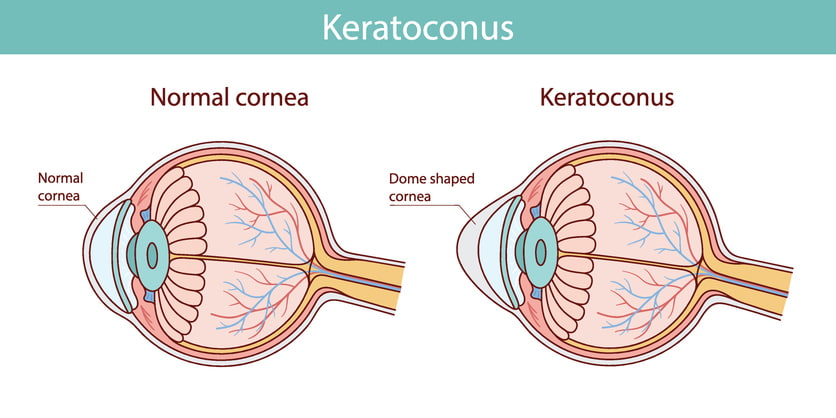
Keratoconus is an eye disease that affects the cornea's structure. A healthy cornea is round, but in people with keratoconus, the tissue thins and weakens over time, causing it to bulge into a cone-like shape. This change in shape prevents the eye from focusing light correctly on the retina, leading to distorted and blurred vision. The condition typically begins during puberty and progresses into a person’s mid-30s. While it usually affects both eyes, one eye is often more severely impacted than the other. Early keratoconus diagnosis is crucial for managing the condition and preserving vision.
How Does Keratoconus Affect Your Vision?
The cornea accounts for about two-thirds of the eye’s total focusing power. When keratoconus alters the cornea’s smooth, round shape, it disrupts the path of light entering the eye. Instead of focusing light clearly onto the retina, the irregular cone shape scatters light rays, resulting in several vision problems. Initially, the effects may be minor, causing slight blurring or distortion. As the condition progresses, the corneal shape becomes increasingly irregular, resulting in significant astigmatism and nearsightedness that can no longer be corrected with standard eyeglasses.
What Are the Symptoms of Keratoconus?
The signs of keratoconus can change as the disease progresses. In the early stages, keratoconus symptoms are often subtle and may be mistaken for common vision changes. As the cornea’s shape continues to distort, symptoms become more pronounced. Key symptoms to watch for include:
- Blurred or Distorted Vision – This is one of the most common early symptoms.
- Increased Light Sensitivity – Bright lights may cause discomfort or halos, making night driving difficult.
- Frequent Changes in Eyeglass Prescription – You might find your vision changing rapidly, requiring new prescriptions often.
- Seeing “Ghost Images” or Multiple Images – This can appear as several images of a single object.
- Eye Redness or Swelling – Some people experience irritation and discomfort.
- Sudden Clouding of Vision – In advanced cases, the back of the cornea can tear, causing sudden and significant vision loss.
What Causes Keratoconus?
The exact keratoconus causes are not fully understood, but researchers believe a combination of genetic and environmental factors is at play. Weakened corneal tissue is a primary factor. The cornea is made of tiny collagen fibers that help maintain its shape. When these fibers weaken, they can no longer support the cornea’s round structure, leading to the characteristic cone-shaped bulge. Other risk factors include:
- Genetics – About 10% of people with keratoconus have a parent with the condition.
- Chronic Eye Rubbing – Aggressive or frequent eye rubbing can contribute to cornea thinning and accelerate the progression of keratoconus.
- Allergies and Asthma – Chronic inflammation from allergies or asthma has been linked to the development of keratoconus.
How Is Keratoconus Treated?
Treatment for keratoconus aims to slow the progression of the disease and improve vision. At Spindel Eye Associates, we offer a range of solutions tailored to each patient’s needs:
- Rigid Gas Permeable (RGP) Lenses – These smaller lenses sit directly on the cornea and can correct vision for many patients with mild to moderate keratoconus.
- Corneal Cross-Linking Treatment – This is a minimally invasive procedure where the eye is saturated with riboflavin drops and then exposed to a controlled amount of ultraviolet (UV) light. This process creates new bonds, or "cross-links," between the collagen fibers in the cornea, making it stronger and more stable.
- CTAK (Corneal Tissue Addition Keratoplasty) – This procedure involves the addition of a customized corneal tissue inlay, which is laser cut and inserted into the cornea to reshape and stabilize it, improving vision without the need for a full corneal transplant.
Frequently Asked Questions
Don’t Let Keratoconus Cloud Your Future. Contact Us Today.
Living with keratoconus can be challenging, but modern treatments offer hope for clear vision and a better quality of life. At Spindel Eye Associates, our team of dedicated optometrists and ophthalmologists is committed to providing the highest level of care for patients in Derry and beyond. If you’re experiencing symptoms of keratoconus or have been diagnosed with the condition, don’t wait for your vision to worsen. Contact us today to schedule a consultation.
We serve Derry, Londonderry, Windham, Raymond, and Bedford